

Industrial TactArray (ITA)
AN INDUSTRIAL PRESSURE SENSOR FOR PRESSURE MAPPING IN EXTREME TEMPERATURES AND PRESSURES
The Industrial TactArray (ITA) is a rigid, capacitive industrial pressure sensor that captures and maps pressure distribution across an entire surface, even in the most extreme conditions. Constructed from high-quality Kapton or polyimide, it's best suited for applications requiring tactile sensors that can withstand extremely high temperatures and pressures — like heat presses, brake pads, and nip rollers.
Key Benefits
High-resolution sensor arrays measure pressure distribution across 20, 40, 80, 160, and 320 psi full-scale pressure ranges and retain performance in temperatures between -40°C and 200°C
Real-time thermal compensation ensures accurate measurements even under changing temperature conditions
Ultra-thin construction, 0.3 mm thick, with high-resolution sensing elements
Rigid construction for flat mounting surfaces only, rated for no bending, unlike flexible TactArray sensors
Available in multiple sizes and configurations, with active areas from 64×64 mm to 320×320 mm
Chameleon Visualization Software provides intuitive, easy to use, high-quality visualization and easy access to data for analysis and export to other applications
Description
TactArray systems capture pressure distribution between two objects in direct physical contact. By placing a TactArray sensor between objects, or applying it to a flat surface, engineers and researchers can measure and visualize pressure information directly inside their process or application.
PPS's Industrial TactArray (ITA) systems are the most rigid option in the TactArray product line, designed for process monitoring and control applications that need a sensor capable of withstanding extreme conditions. The system comprises a flat sensor, T5000 signal conditioning electronics, and Chameleon Visualization Software, which captures and records live data as both numeric and visual pressure representations.
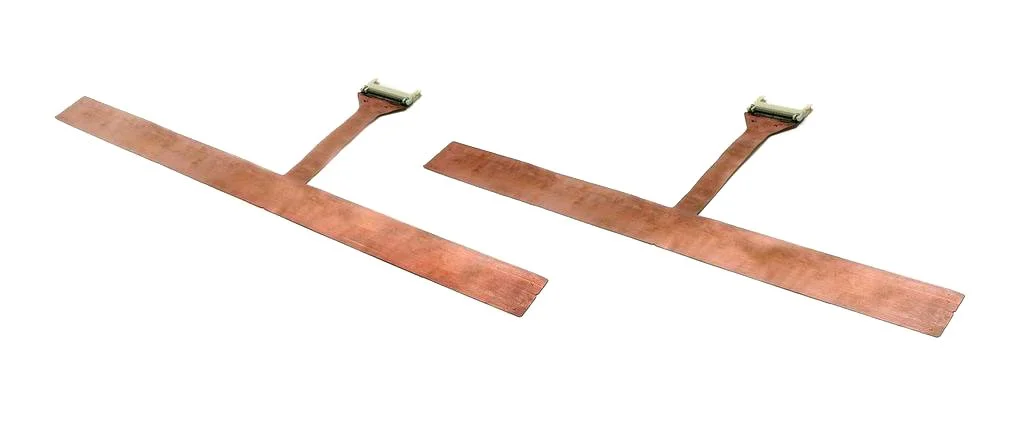
Built for Extreme Industrial Environments
As a standalone sensor, the ITA is designed for flat mounting surfaces only — PPS's spec for ITA calls for "do not bend," unlike the flexible Conformable TactArray. As a high-temperature pressure sensor, this rigid construction holds up to high pressure and high temperature at once, in harsh environments like heat presses and nip rollers where a flexible or resistive sensor would wear out or lose accuracy.
The ITA sensor integrates into systems that need precise measurement and optimization, including assembly-line quality assurance, tooling and compression systems, and equipment testing.
Key Features:
Available in a range of active area configurations, with exact options listed in the sensor catalog
Sensing element resolution from 2×2 mm to 10×10 mm
Available in full-scale pressure ratings of 20, 40, 80, 160, and 320 psi
Operates in environments between -40°C and 200°C
Minimum sensitivity as low as 15 mpsi
Thin construction, 0.3 mm thick
Example Applications:
Pressure analysis between moving plates — enables uniform load distribution
Heat sealing jaw mapping — ensures consistent pressure for reliable seals
Calibrating pressure clamps — improves accuracy and clamp performance
Nip roller monitoring — ensures uniform pressure distribution across the roller
Brake pad contact-pressure testing — verifies even contact across the pad surface
T-shirt and screen printing — achieves even pressure for high-quality results
Steel plate pressing — optimizes pressure in metal forming
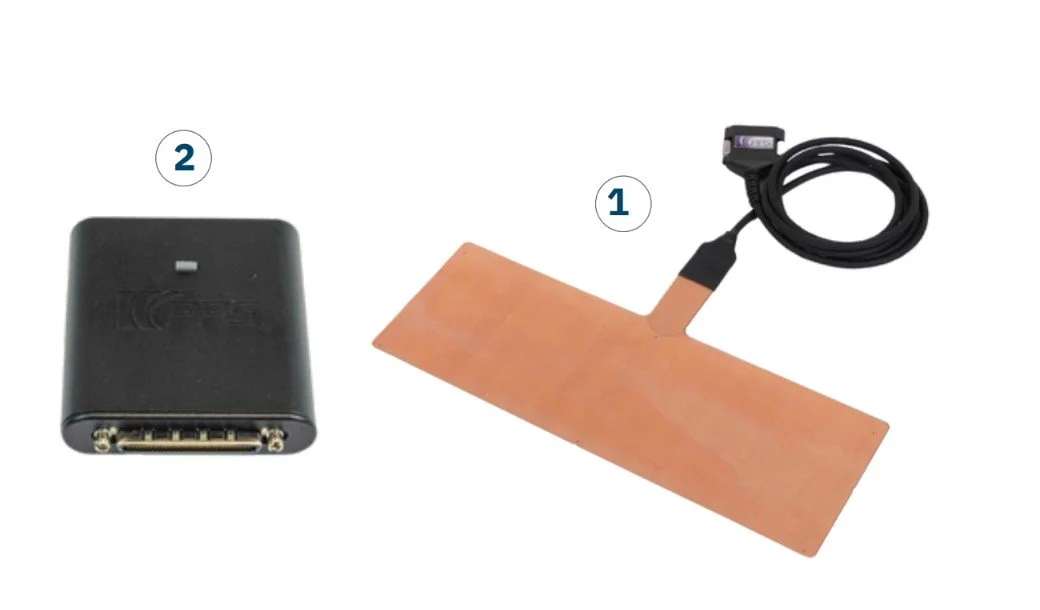
ITA System Components
Industrial TactArray Sensor
T5000 signal conditioning electronics (wired, high-speed USB-C)
Chameleon Visualization Software
Industrial TactArray system specifications
ITA Sensor Specifications
| Pressure Range | 20, 40, 80, 160 & 320 psi |
|---|---|
| Thickness | 0.3 mm |
| Minimum SNR | 300:1 |
| Min. Sensitivity | 15 mpsi |
| Linearity | 99.8% |
| Gain Non-Repeatability | <3% |
| Element Size | 2×2 mm – 10×10 mm |
| Active Area | Refer to Sensor Drawing |
| Bend Limit (Care) | Do not bend |
Electronic Specifications
| Sampling Rate | <100 Hz |
|---|---|
| Interconnection | Wired, high-speed USB-C |
| ADC Resolution | 12 bit |
| Input Voltage / Power | 5 V / 2 W |
| Operating Temperature | -20 ˚C to 200 ˚C (static) |
| Cable Length | 59 in (1.5 m) |
FAQ
What makes the Industrial TactArray different from a standard industrial pressure sensor?
Most industrial pressure sensors and high-pressure sensors are single-point transducers, as such they report one reading at one location. ITA is a capacitive, multi-element array that maps pressure across an entire contact surface at once, which matters anywhere uneven pressure causes defects, such as nip rollers or heat sealing jaws.
What temperature range does the ITA operate in?
ITA operates across static process temperatures from -40°C to 200°C (-40°F to 392°F), with real-time thermal compensation to keep readings accurate as temperatures shift during a process.
What is the maximum pressure the ITA can measure?
ITA sensors are available in 20, 40, 80, 160, and 320 psi full-scale pressure ratings, selected based on the application to keep measurements at high accuracy across the working range.
Is the Industrial TactArray flexible like the Conformable TactArray?
No. ITA uses a rigid construction built for flat mounting surfaces only and should not be bent in any direction. This is what gives it the durability to hold up in high-pressure, high-temperature industrial environments. For soft, multi-curved, or body-contact applications, the Conformable TactArray is the better fit.
Can the ITA be customized for an application that isn't listed here?
Yes. ITA sensors are available in a range of sizes, geometries, and array configurations. See the sensor catalog or contact PPS for a custom inquiry.
What's the difference between a capacitive pressure sensor and other types, like piezoresistive or strain-gauge sensors?
Piezoresistive and strain-gauge sensors measure pressure indirectly, through a change in electrical resistance: a diaphragm or bonded resistive element flexes under load, and that strain changes the material's resistance. Those resistive elements are inherently temperature-sensitive and are typically built as one discrete load cell reporting a single aggregate value, not a distribution.
Capacitive sensors like ITA work differently: each sensing element is built like a capacitor, with two conductive plates separated by a dielectric layer, and contact pressure changes the distance between them, which changes capacitance. That mechanism is backed by PPS's own capacitive-sensing data: roughly 2x the repeatability, about 100x better minimum-pressure detection, and around 50% better resolution than resistive sensing, with higher overall sensitivity and linearity. It's why PPS can pack many capacitive elements into a dense array and still hold <3% gain non-repeatability across ITA's full -40°C to 200°C range.