PPS Company: 30 Years of Tactile Sensing Engineering
1 TactileGloveHandshake.png

Since 1996, PPS has helped engineers and researchers measure something that is usually invisible: the pressure and force at the point of contact. What began as DARPA and NIH-funded research is now used in labs, clinics and production lines around the world. Our engineering team specializes in complex measurement problems. We design high-precision tactile sensors that fit into your research, design and development process, and turn physical interaction into data you can act on. With that data, you can create better products, improve processes and make decisions based on evidence rather than assumptions.

We have worked with more than 100 organizations, from start-ups and universities to Fortune 500 companies, across four continents. Our projects cover robotics, medical devices, body pressure mapping, wearable technology, training simulation and more. As a small company, we offer something larger suppliers often cannot. You work directly with the engineers on your project, so questions are answered quickly and the design can change as your project develops.

Why Choose PPS?

Our Expertise

  • Patented Capacitive Sensor Technology: Our tactile sensors are thin, flexible and highly repeatable, and they can be shaped to the surface you need to measure, from a fingertip to the rear wing of a racing car.

  • Custom Solutions: Our engineers design custom sensors, integrate the hardware and software, and adapt the system to your application, however complex it is.

  • Regulatory Experience: We have experience with US and international regulatory standards (FDA, CE, UL, CSA, CGMP) and can support your project through its compliance requirements.

Our Achievements

  • Patents: 20 issued patents and 2 pending in the US and internationally.

  • Published Research: PPS sensors have been used in more than 170 peer-reviewed studies.

  • Global Reach, Local Support: With teams in the US, UK, China, Korea, India and Vietnam, and distribution partners across Asia, we support customers close to where they work.

Our Values

  • Precision and Quality: Every product we design reflects our commitment to careful engineering and accurate measurement.

  • Collaboration: We work closely with our customers to understand the problem before we design the solution.

If you have a measurement problem that standard sensors cannot solve, talk to our engineers.


Meet The Team

DR. GORDON DOBIE, PPS UK Director

DR. GORDON DOBIE - PPS UK Director

Dr. Dobie leads the PPS Research and Development team and oversees European operations from the PPS UK office in Glasgow.

He holds a PhD in robotics and signal processing from the University of Strathclyde. As a recipient of the Royal Society of Edinburgh Enterprise Fellowship, he gained significant experience in commercializing new technologies, and this has remained central to his career. He has led multi-partner R&D projects in robotics, medical devices and wearable technology, making sure each solution meets both the technical requirements and the needs of the market.

He also directs the joint research program between PPS and the University of Strathclyde, which develops tactile sensing for robotics, healthcare and performance gear. His academic work includes an extensive portfolio of published research papers and patents. His combined expertise in sensor design, signal processing and commercialization helps PPS deliver high-precision sensing solutions to its customers.

Areas of expertise: sensor design, tactile sensing, signal processing, automation, ultrasonic systems, non-destructive evaluation (NDE), and technology commercialization.

CMacLeod.jpg

DR. CHARLES MACLEOD, Head of Sales & Business Relations

Dr. MacLeod leads sales and business development at PPS and works with customers worldwide, from university research groups to Fortune 500 companies.

He holds an MEng and a PhD from the University of Strathclyde in Glasgow, with a background in sensing, robotics and electronics. He has led projects across the Technology Readiness Levels, taking research from early concept to industry-ready systems. Because of this, he can discuss a customer's measurement problem at engineering level from the first conversation.

As global sales lead, he builds long-term relationships with customers in robotics, manufacturing, medical devices and ergonomics. He has extensive knowledge of the ergonomics field and regularly presents PPS solutions there. In his presentations, he shows how pressure data can turn comfort and fit from subjective opinion into something that can be measured. In every industry he works with, his focus is the same: to understand what each customer needs to measure, and how those needs change as their projects develop.

Areas of expertise: tactile sensing, ergonomics, robotics, electronics, and technical sales.

DR. JAE SON, Founder and Sensor Advisor

DR. JAE SON - Founder and Sensor Advisor

Dr. Son is the driving force behind PPS. Through his academic research and the companies he has built, he has led the development of tactile sensing technology for three decades.

He earned his PhD from Harvard University in 1996, with research focused on improving robotic dexterity through tactile sensing. In the same year, he founded Pressure Profile Systems, Inc. (PPS). Under his leadership, PPS has developed capacitive tactile sensing for medical devices, robotics, consumer electronics and wearables.

Dr. Son led the development of medical devices including the ManoScan system and the SureTouch (now Bexa) Breast Exam. ManoScan uses a catheter with 36 sensors to give clinicians high-resolution data on esophageal function, and it is now sold by Medtronic. SureTouch uses tactile sensing to detect breast lesions without radiation, which makes breast exams safer for women, particularly younger patients.

As Founder and Sensor Advisor, Dr. Son continues to guide PPS sensor development. He helps Fortune 500 companies and global brands create wearable devices, robotic systems and other products where touch must be measured accurately. He remains focused on turning tactile sensing into technology people can use.

Areas of expertise: tactile sensing, robotic dexterity, medical device development, and wearable technology.


HISTORY - PPS Company Timeline

2026
  • PPS Marks 30 Years: Three decades of capturing the sense of touch, from DARPA-funded research to labs and production lines worldwide.
  • NIOSH Research Award: NIOSH funds PPS and Purdue University to develop a hardened Industrial TactileGlove for factory worker safety.
  • New Partners in Asia: Distribution partnerships in India and China bring local support to customers across the region.
  • Chameleon 2026 Release: Redesigned visualization and analysis software, with multi-file comparison and an updated GUI.
  • 2025
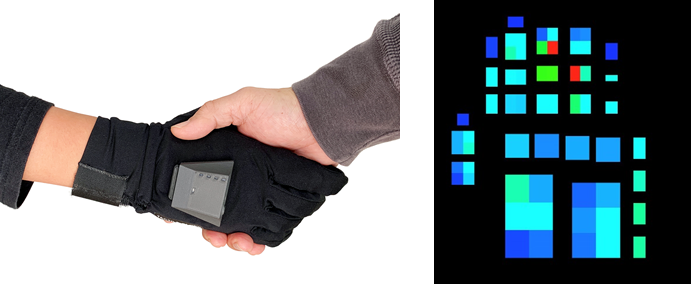
  • TactileGlove II Launch: A redesigned glove with a more robust internal structure and Bluetooth 5 connectivity.
  • PKB (Precision Knee Balancer): UK orthopedic surgeons test the investigational knee sensor on cadaveric knees.
  • AeroStrip in Formula Student Cars: Testing with University of Strathclyde Motorsport validates rear-wing simulations, leading to five team sponsorships in 2026.
  • 2024
  • RoboTact Sensor Launch: PPS debuts RoboTact, a turnkey sensor solution for robotic grippers to enhance manipulation and gripping precision.
  • Growth in Academic Collaborations: PPS deepens its ties with universities and research institutions, supplying sensors for cutting-edge research in robotics, biomechanics, and haptics.
  • Technical Milestone: Integration of accelerometers into tactile sensor arrays, adding an extra dimension to sensor data collection and analysis.
  • 2023
  • Focus on Sustainability: PPS begins exploring sustainable materials for sensor manufacturing to align with global environmental goals.
  • Expansion into New Markets: Development of sensors tailored for augmented reality (AR) and virtual reality (VR) systems, enabling better user interaction through tactile feedback.
  • 2020
  • TactileHead and TactileGlove Launch: PPS releases TactileHead (head-mounted sensors for wearables) and TactileGlove (sensor-embedded gloves for ergonomics, health & safety, and virtual reality).
  • COVID-19 Impact: PPS sensors are employed in healthcare settings to study pressure-related injuries and improve ergonomic designs for PPE (Personal Protective Equipment).
  • 2019
  • Red Bull Collaboration for Elite Sports: PPS partners with Red Bull's High Performance team to develop custom foot pressure mapping insoles for elite surfers. These insoles revolutionize training methodologies and surfboard design.
  • 2018
  • Spray Pattern Sensor Developed: PPS introduces a spray pattern sensor for fluid dynamics research, enabling precise measurement and analysis of spray distribution.
  • 2017
  • Stretchable TactArray Technology Released: PPS pioneers stretchable tactile sensor arrays for applications in wearables and soft robotics, opening new markets in clothing and textile technology.
  • WristAid Launch: PPS introduces WristAid, a non-invasive device to alleviate Carpal Tunnel Syndrome (CTS). Wins multiple awards and demonstrates clinical impact.
  • 2015
  • PPS Expands into Europe: PPS UK is founded in collaboration with the University of Strathclyde, creating a new R&D center to develop exciting new pressure sensing technologies.
  • 2013
  • Launch of SingleTact: PPS introduces SingleTact, a compact and highly sensitive capacitive pressure sensor for research and industrial applications. SingleTact becomes a staple product for precision sensing.
  • 2010
  • AeroStrip Sensor Launch: PPS introduces AeroStrip for aerodynamic research and industrial applications.
  • GoSmart, Inc. Founded: Dr. Jae Son establishes GoSmart to develop consumer products like the SleepSmart Pillow.
  • 2009
  • SSI Acquired for $35M: Given Imaging acquires Sierra Scientific Instruments for $35 million.
  • 2008
  • Spun-Off Consumer Electronics Company: PPS founds Impress, Inc., which develops 3D Tactile Input technology based on internal measurement principles. Impress' ultra-thin tactile sensors seamlessly integrate into displays or touch surfaces, expanding touch-based interface capabilities.
  • Embedded Tactile Sensors: PPS sensor technology begins being embedded into several products to provide a "sense of touch":
    • eSoles uses PPS technology to design the world’s most advanced 3D foot scanning kiosk.
    • LG Mobile integrates PPS sensors into the BL-20 phone, producing over 1M units.
    • BarrettHand robotic grippers incorporate PPS sensors for advanced manipulation.
    • jWatch, a health watch embedded with PPS pulse sensor technology, is launched.
  • 2002-2005
    • Spun-Off Two Medical Device Companies: PPS spins off two companies:
      • Sierra Scientific Instruments (SSI): Develops the ManoScan system for evaluating esophageal function.
      • Medical Tactile, Inc. (MTI): Creates the FDA-cleared SureTouch Breast Exam, a non-invasive, radiation-free mass detection system that amplifies and visualizes masses as small as 5 mm. SureTouch is now marketed as Bexa, a revolutionary breast examination device aimed at early detection and preventative care.
    • Commercial Technology Development: PPS begins applying its sensor technology to various products and applications, including medical devices, robotics, ergonomics, automotive applications, and consumer products, providing the "sense of touch" in development tools and final products.
    1999-2002
    • Applied Research & Development: PPS expands its technology capabilities through collaborations with innovative organizations:
      • NASA: Developments for space exploration applications, focusing on tactile sensing for precision tasks in zero-gravity environments.
      • MIT (Massachusetts Institute of Technology): Research collaboration to advance robotics and tactile feedback systems for precision engineering applications.
      • Schick-Wilkinson Sword: Enhanced software capabilities, faster scan rates, and new sensor material capabilities for consumer products.
    1996-1999
    • Core Technology Development: Foundational PPS technology is developed through government grants:
      • Defense Advanced Research Projects Agency (DARPA): Focused on military applications of tactile sensing.
      • Army Research Lab: Development of ruggedized sensors for defense applications.
      • National Institutes of Health (NIH): Support for medical applications of tactile sensing.
    • University and industry collaborations result in discrete tactile sensing pad innovations.
    1996
    • PPS Founded: Pressure Profile Systems (PPS) is established by Dr. Jae Son to leverage and enhance capacitive tactile sensing technology.

    A few of our customers and partners